Ogden's Business Economy
Ogden sits on I-15, where I-84 runs alongside it north of the city and splits east at its southern edge (Wikipedia). It has been a rail, manufacturing and logistics city since the transcontinental railroad reached Utah in 1869 (Utah Division of State History). That industrial base now sits alongside Hill AFB's aerospace and defense supply chain, McKay-Dee Hospital and Ogden Regional Medical Center's healthcare and professional services ecosystem, and a revitalized downtown core along Historic 25th Street and Washington Boulevard driving retail and real estate development.
Every business type below carries the same structural problem in a different shape: money goes out before it comes back in. A carrier fuels a truck before the freight bill clears. A dental practice bills insurance before the claim pays. A retailer stocks inventory before the season sells through. A revolving line of credit is sized to that specific gap, draw when the cost hits, repay when the revenue lands.
Apply for an Ogden Business Line of Credit
Any of the five industries below, 24-hour decisions.
Check Eligibility →Logistics, Trucking & Freight
I-15 and I-84 share the highway through Ogden before I-84 splits east, connecting north-south and east-west freight corridors and making Ogden a natural base for regional LTL carriers, freight brokers, and drayage companies serving the Union Pacific intermodal facility. Hill AFB's logistics mission adds sustained demand for defense carriers hauling oversized loads and time-sensitive components under federal payment terms (generally due 30 days after invoice or acceptance, per FAR 52.232-25), and agricultural transport operators serving Cache Valley round out the corridor with seasonal harvest-driven volume spikes.
Every operator in this segment faces the same timing gap: fuel and driver wages go out weeks before freight payment comes in.
| Parameter | Detail |
|---|---|
| Credit Range | $50,000 – $2,000,000 |
| Eligible Uses | Fuel, driver payroll, fleet maintenance, insurance, dispatch costs |
| Revenue Minimum | $25,000/month in freight or logistics revenue |
| Time in Business | 12+ months with verifiable load history |
| Decision Timeline | 24–48 hours |
Ogden's Strategic Freight Position
Ogden sits where I-84 and I-15 share the highway before I-84 splits east. That connects north-south and east-west corridors at one point.
Carriers based in Ogden can efficiently serve load markets in four directions. That makes it a natural base for regional LTL carriers, freight brokers, and specialized transport operations.
The Union Pacific main line supports intermodal logistics relying on drayage carriers for first- and last-mile connections. These operators face the same problem as OTR carriers: fuel and driver wages precede freight payment by weeks.
Ogden's Defense Logistics Sector
Hill AFB's logistics mission creates sustained demand for specialized transport in Weber County. Defense carriers hauling oversized loads or time-sensitive components work under the same federal payment terms as manufacturing subcontractors.
A revolving line sized to one to two months of fuel and driver costs eliminates high-cost factoring between contract payments.
Agricultural transport operators serving Cache Valley dairy, grain, and produce markets also base near Ogden. Harvest and planting periods create seasonal volume spikes requiring fleet expansion ahead of the revenue that expansion generates.
Manufacturing & Aerospace
The Ogden Industrial Core along Wall Avenue hosts food processing, distribution-integrated manufacturing, and light industrial operations, while the Weber County corridor through Roy, Clearfield, and Sunset carries defense and aerospace component production tied to Hill AFB. Tier 1 through Tier 3 suppliers work under fixed-price or time-and-materials contracts paid on the federal clause's 30-day terms (FAR 52.232-25), and food processors buy raw agricultural inputs at harvest prices months ahead of retail sell-through.
| Parameter | Detail |
|---|---|
| Credit Range | $75,000 – $3,000,000 |
| Eligible Uses | Raw materials, production payroll, subcontractor payments, tooling, equipment maintenance |
| Revenue Minimum | $35,000/month in manufacturing or contract revenue |
| Time in Business | 18+ months; defense contractors with active contracts considered at 12 months |
| Decision Timeline | 24–72 hours |
Ogden's Manufacturing Identity
Ogden has been a manufacturing and rail city since the transcontinental railroad reached Utah in 1869 (Utah Division of State History). That industrial identity persists today across a diversified base.
The Ogden Industrial Core along Wall Avenue hosts food processing, distribution-integrated manufacturing, and general light industrial operations. The Weber County corridor through Roy, Clearfield, and Sunset includes defense and aerospace component production tied to Hill AFB.
Manufacturers in both zones carry the same structural timing problem. Production must be funded before delivery, and payment arrives only after delivery, inspection, and invoice processing.
Hill AFB's Role in Ogden's Manufacturing Economy
Hill AFB contributes billions annually to Utah's economy. A substantial portion flows to Weber County manufacturers through maintenance contracts, parts procurement, and service agreements.
Tier 1 through Tier 3 suppliers work under fixed-price or time-and-materials contracts. Federal payment is due 30 days after invoice or acceptance, whichever is later (FAR 52.232-25). The period between delivery and payment is where a revolving line earns its cost.
Food processors face a different but equally predictable cycle. Raw agricultural inputs must be purchased at harvest prices, with production scheduled months ahead of the retail sell-through period.
Manufacturing Categories Served
- Aerospace and defense component manufacturers (Hill AFB supply chain)
- Precision machining and specialty metal fabrication
- Food processing and co-packing operations
- Chemical and specialty materials manufacturing
- Industrial equipment and machinery production
- Plastics, composites, and advanced materials
- Electronics assembly and systems integration
Professional Practices
Ogden is the commercial and healthcare center for Weber County, home to 262,223 residents in the 2020 Census (Census Bureau). McKay-Dee Hospital and Ogden Regional Medical Center anchor a dense healthcare ecosystem of physician offices, dental practices, and behavioral health providers, alongside a legal and financial services sector, all billing on insurance or engagement cycles rather than at time of service. As an illustration, a dental practice billing $80,000 a month may collect only $45,000 that month, with the rest sitting in claim queues, payroll and lab fees don't wait for those claims to clear.
| Parameter | Detail |
|---|---|
| Credit Range | $50,000 – $1,500,000 |
| Eligible Uses | Payroll, supplies, equipment maintenance, rent, marketing |
| Revenue Minimum | $25,000/month in practice revenue |
| Time in Business | 24+ months preferred; 18 months minimum |
| Decision Timeline | 24–72 hours |
Weber County's Professional Services Market
Ogden is the commercial and healthcare center for Weber County, home to 262,223 residents in the 2020 Census. McKay-Dee Hospital and Ogden Regional Medical Center anchor a dense professional healthcare ecosystem.
Physician offices, dental practices, physical therapy centers, and behavioral health providers all generate consistent revenue. That revenue arrives on insurance billing cycles, not at the time of service.
Weber County's legal and financial services sector adds more. Law firms, accounting practices, and financial advisors all carry predictable revenue streams, and predictable billing cycle gaps.
How the A/R Bridge Works for Ogden Practices
For illustration, a dental practice billing $80,000 per month may collect only $45,000 that month. The rest sits in insurance claim queues at various processing stages.
Payroll, supply costs, and lab fees don't pause while claims process. A revolving line draws during the payroll window and repays when claims clear.
This works best for practices with predictable payer mixes. The lag is consistent enough to plan around, the line smooths the gap insurance timing creates.
Real Estate
The Junction, Historic 25th Street, and multifamily growth along Washington Boulevard drive Ogden's development activity, while Weber County's affordability fuels single-family rental and fix-and-flip volume for a growing base of property managers. Downtown redevelopment supports a sustained adaptive-reuse renovation pipeline that often requires upfront vendor payment before funding triggers, and property managers face a separate mismatch, rent collections cluster at month-start while maintenance costs distribute across the month.
| Parameter | Detail |
|---|---|
| Credit Range | $100,000 – $2,500,000 |
| Eligible Uses | Payroll, vendor payments, renovation materials, marketing, overhead |
| Revenue Minimum | $35,000/month in operating revenue (fees, commissions, or contracts) |
| Time in Business | 24+ months preferred; 12 months minimum |
| Decision Timeline | 24–72 hours |
Weber County's Real Estate Business Environment
Ogden's real estate sector serves a growing development market. The Junction, Historic 25th Street, and multifamily growth along Washington Boulevard all drive demand.
Weber County's affordability fuels single-family rental and fix-and-flip activity. That supports a growing ecosystem of property managers.
These businesses carry consistent revenue from fees and contracts. Their overhead and payroll don't pause between closings.
Downtown Ogden Development Activity
Ogden's downtown redevelopment creates a sustained renovation pipeline. Adaptive reuse projects are a consistent revenue source.
These projects often require upfront vendor payments before funding triggers. An operating line covers that gap.
Property management companies face a different timing issue. Rent collections cluster at month-start while maintenance distributes across the month.
The revolving line draws at the start and repays when collections clear.
Real estate development lines
Ogden's Real Estate Renaissance and the Capital It Requires
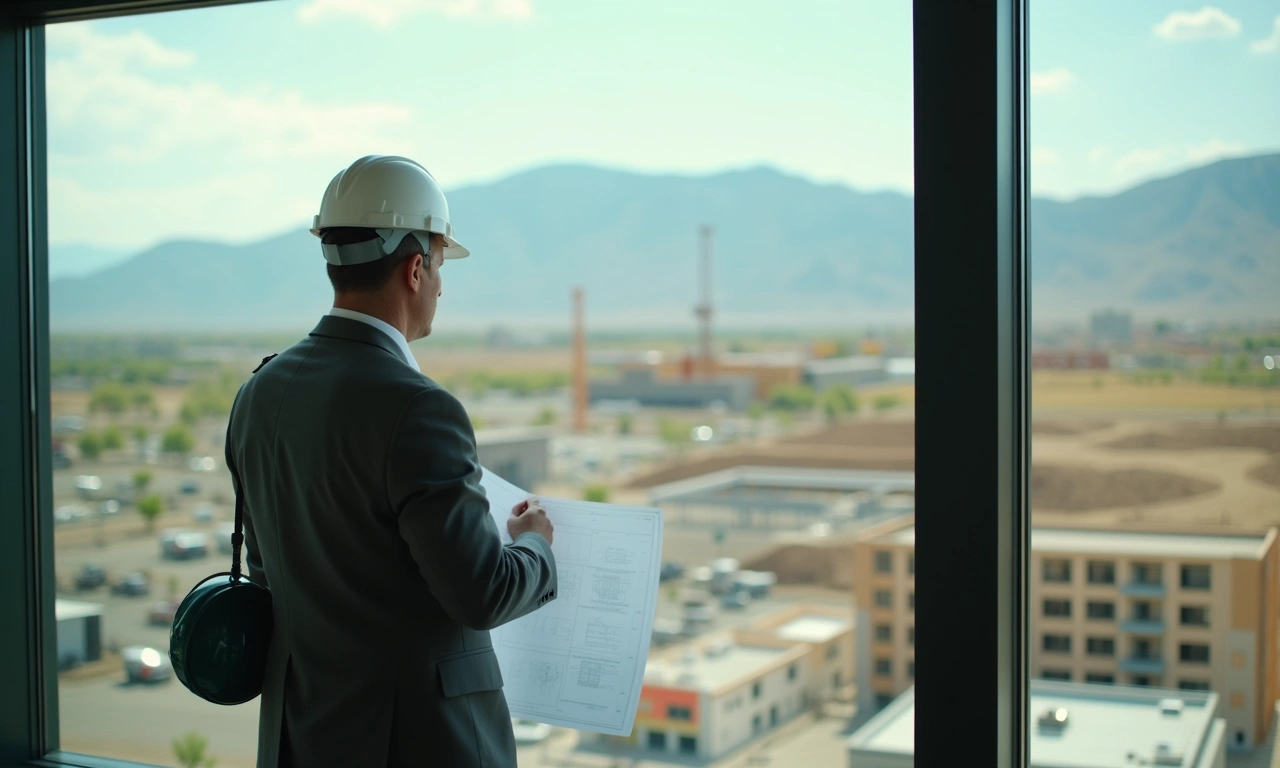
Ogden has seen significant commercial real estate redevelopment in recent years. The revitalization of the 25th Street historic corridor, the expansion of downtown mixed-use development, the growth of Weber State University-adjacent commercial projects, and the spillover residential development pressure flowing north from Salt Lake City's constrained housing market have combined to create a real estate development environment of remarkable velocity and depth.
For the developers, investors, and construction operators driving this transformation - entities anchored across Weber and Davis counties - the capital requirements of active real estate development are continuous, sequential, and often simultaneously time-sensitive. Land acquisition must close before financing is fully assembled. Construction must proceed before take-out financing is committed. Pre-sales or pre-leases must be secured before construction lenders will fund. The working capital requirements of managing this process do not wait for institutional approval cycles.
The Working Capital Requirements of Active Development
- Pre-acquisition due diligence - Environmental studies, title searches, feasibility analyses paid before land closes.
- Earnest money and option payments - Capital committed before transactions close.
- Pre-construction soft costs - Architecture, engineering, and permitting costs come before construction starts.
- Construction period cash flow gaps - Draw schedules rarely align with subcontractor payment demands.
- Carrying costs during lease-up - Ongoing costs without offsetting revenue during stabilization.
Revolving Credit vs. Construction Lending: Understanding the Difference
A construction loan is a project-specific, draw-based instrument secured by the specific property under development. It is not revolving, not available for other projects, and not portable across a developer's portfolio.
A revolving working capital line of credit is an entity-level instrument secured against the developer's business operations. It funds the between-project expenses and remains available for the developer's next opportunity without reapplication.
Interest-Only Working Capital Lines for Real Estate Developers
For active Ogden developers managing multiple simultaneous projects, interest-only draw structures on revolving credit lines are particularly valuable. By paying only the interest on outstanding draws during the construction and lease-up phase, the developer preserves maximum operating cash flow during the capital-intensive development period.
Underwriting Real Estate Developer Credit
- Project completion track record - History of successfully completing and stabilizing projects.
- Entity net worth and liquidity - Commercial real estate developers evaluated for net worth and debt-to-equity ratios.
- Portfolio leverage - Total debt relative to combined asset value across all projects.
- Cash flow from completed projects - Ongoing income demonstrating debt service capacity.
- Market knowledge depth - Understanding of Ogden and Weber County market dynamics.
"Ogden's real estate market is rewarding developers who can move decisively. A revolving credit facility maintained at the entity level is the instrument that makes decisiveness possible - turning opportunity from a concept into a capital event."
Retail
Historic 25th Street (Visit Ogden) is a downtown district of historic buildings, with boutiques, specialty food, and entertainment drawing visitors from across the Wasatch Front, while Washington Boulevard serves as the main commercial spine and the Junction district anchors an outdoor and active-lifestyle cluster around the downtown recreational campus. Ogden's outdoor recreation identity drives two seasonal build cycles, winter runs August through October and summer runs March through May, and retailers must be stocked before the first weekend of season traffic arrives.
| Parameter | Detail |
|---|---|
| Credit Range | $25,000 – $750,000 |
| Eligible Uses | Inventory purchasing, payroll, rent, supplier prepayments, marketing |
| Revenue Minimum | $15,000/month in retail sales |
| Time in Business | 12+ months |
| Decision Timeline | 24–72 hours |
Ogden's Retail Districts
Ogden's retail landscape spans several distinct zones. Historic 25th Street is the city's historic downtown retail and dining district.
Boutiques, specialty food, and entertainment draw visitors from across the Wasatch Front.
Washington Boulevard serves as the main commercial spine. The Junction district supports an outdoor and active lifestyle retail cluster around the downtown recreational campus.
Every retailer across these zones shares the same challenge. Inventory must be purchased ahead of the sales season.
A revolving line lets you buy when supplier terms are favorable. You don't need to wait until cash is available.
Seasonal Retail Dynamics in Ogden
Ogden's outdoor recreation identity creates strong seasonal demand. Winter builds run August through October.
Summer outdoor season runs March through May.
Retailers must be stocked before the first weekend of season traffic arrives. A revolving line draws during the build period and repays as season sales clear.
Year-round Washington Boulevard retailers face a different version of the same problem. Slow months still require full payroll and rent.
The next busy period requires stocking before current cash has recovered.
Program details by industry
| Industry | Credit Range | Structure | Eligible Uses | Revenue Minimum | Time in Business | FICO Minimum | Decision Timeline |
|---|---|---|---|---|---|---|---|
| Logistics | $50,000 – $2,000,000 | Revolving operating line, draw for fuel/payroll, repay on freight payment | Fuel, driver payroll, fleet maintenance, insurance, dispatch costs | $25,000/month in freight or logistics revenue | 12+ months with verifiable load history | 580+ (owner) | 24–48 hours |
| Manufacturing | $75,000 – $3,000,000 | Revolving production line, draw on materials/payroll, repay on contract or customer payment | Raw materials, production payroll, subcontractor payments, tooling, equipment maintenance | $35,000/month in manufacturing or contract revenue | 18+ months; defense contractors with active contracts considered at 12 months | 580+ (owner) | 24–72 hours |
| Professional practices | $50,000 – $1,500,000 | Revolving A/R bridge, draw on payroll/overhead, repay on collections | Payroll, supplies, equipment maintenance, rent, marketing | $25,000/month in practice revenue | 24+ months preferred; 18 months minimum | 600+ (owner/principal) | 24–72 hours |
| Real estate | $100,000 – $2,500,000 | Revolving operating line, draw, repay, reset | Payroll, vendor payments, renovation materials, marketing, overhead | $35,000/month in operating revenue (fees, commissions, or contracts) | 24+ months preferred; 12 months minimum | 600+ (owner) | 24–72 hours |
| Retail | $25,000 – $750,000 | Revolving line, draw for inventory, repay on sales | Inventory purchasing, payroll, rent, supplier prepayments, marketing | $15,000/month in retail sales | 12+ months | 580+ (owner) | 24–72 hours |
Sources
Figures labeled as illustrations are examples, not market data. Program terms in the table above are provided by lender partners and may change.
- U.S. Census Bureau, QuickFacts: Weber County, Utah (2020 Census 262,223)
- Federal Acquisition Regulation 52.232-25, Prompt Payment (payment due the later of 30 days after a proper invoice or acceptance)
- Utah Division of State History, Railroads in Utah (Union Pacific route to Ogden, 1869; Utah Central line to Salt Lake City, January 1870)
- Wikipedia, Interstate 84 in Utah (I-84 and I-15 concurrency through Ogden)
- Intermountain Health, McKay-Dee Hospital, 4401 Harrison Blvd., Ogden
- Visit Ogden, Ogden Regional Medical Center listing
- Visit Ogden, 25th Street Walking Tour
Related Northern Utah Programs
The Weber County Industrial Capital program covers larger manufacturing and logistics operations across the full Weber County corridor with lines up to $5M. The Roy business credit program serves the adjacent Roy/Clearfield defense and industrial zone, and the Farmington Capital Hub links the broader northern Utah freight and professional services network.
Start Your Ogden Business Line Application
Call-only, speak with an advisor who understands your industry's payment cycle.
Apply Now →