Affiliate Disclosure: This site earns compensation via affiliate links to lender partners. This does not affect your rates or terms. Full disclosure.
Middle-market ABL revolvers price at SOFR+125 basis points for strong borrowers (ABF Journal, 2026). That's just the rate, not the total cost. Unused fees, field exams, and origination costs push the real cost well past that number.
Ask an asset-based lender for a rate quote and you'll get SOFR plus a spread. That number is real. It is also incomplete.
A full ABL facility carries at least three more cost lines beyond the spread. There's the unused line fee on whatever you haven't drawn.
There's the field exam and monitoring fee, which pays the lender to verify your collateral. And there's origination and closing cost at signing.
Skip any of those and your cost comparison is wrong before you've even started. This is especially true on smaller facilities. Monitoring costs don't shrink the way the loan amount does.
Below is every documented cost line on a facility priced in 2026. Each one is sourced to credit agreements and industry advisory data. Two current market surveys also explain why non-bank pricing is running hotter than usual.
Key Takeaways
- Middle-market ABL revolvers price as tight as SOFR+125bps for well-collateralized borrowers with strong receivables and inventory (ABF Journal, "Middle Market Debt Weekly," 2026).
- Stated revolver spreads in SEC-filed credit agreements more commonly cluster SOFR+150 to SOFR+200bps, depending on credit quality and collateral strength.
- Unused line fees on the undrawn portion of an ABL revolver commonly run 0.15%–0.50% per annum (SEC-filed credit agreements).
- Some facilities use a tiered unused fee structure, such as 0.375% up to a usage threshold and 0.25% above it.
- Field exam and monitoring costs commonly blend to roughly 1% commitment cost plus roughly 0.5% monitoring cost (industry ABL advisory publications, illustrative).
- One disclosed example ran roughly $400,000 a year in monitoring costs on a $150 million revolver at 60% average utilization.
- Origination and closing costs typically include legal fees, UCC search and filing fees, and appraisal fees where equipment or real estate secures the loan.
- The Federal Reserve's April 2026 Senior Loan Officer Opinion Survey reported tighter C&I lending standards and unchanged demand across firms of all sizes for Q1 2026.
- SFNet's Q1 2026 Asset-Based Lending Index, published July 1, 2026, showed bank lender confidence fell 7 points to 55.
- The same SFNet survey showed non-bank lender confidence rose 9 points to 67, the highest reading in more than three years.
- Bank new ABL commitments stayed flat in Q1 2026 while non-bank new commitments rose 1%, per SFNet.
- Field exam and monitoring costs don't scale down proportionally with facility size, which is part of why very small ABL deals are harder to place economically.
In This Analysis

What Does an Asset-Based Facility Actually Cost in 2026?
An ABL facility has four cost components, not one. Every term sheet has them. Not every borrower reads past the first line.
The rate spread gets the attention because it's the number lenders lead with. The other three components decide a facility's real cost. Those are the unused line fee, field exam cost, and origination costs.
| Cost Component | Typical 2026 Range | What Drives It |
|---|---|---|
| Interest rate spread | SOFR+125 to SOFR+200bps | Collateral quality, receivables/inventory strength, credit profile |
| Unused line fee | 0.15%–0.50% per annum | Undrawn portion of the revolver, some tiered by usage |
| Field exam & collateral monitoring | ~1% commitment + ~0.5% monitoring (blended, illustrative) | Facility size, exam frequency, collateral complexity |
| Origination & closing costs | Legal, UCC search/filing, appraisal (varies by deal) | Collateral type, deal complexity, number of lenders |
Every line above is priced independently. A borrower with tight rate pricing can still land a high all-in cost. A large unused balance or heavy field exam schedule can do that.
Rate alone tells you almost nothing about total cost. The rest of this article works through each line in order.
Pricing runs highest for distressed or special-situations facilities, detailed on its own page.
The Interest Rate: SOFR Plus Spread
ABL pricing floats. The base is SOFR, the reference rate that replaced LIBOR. A spread gets added on top, set in the credit agreement.
The spread is where collateral quality shows up in the number. Middle-market ABL revolvers price as tight as SOFR+125bps for the strongest borrowers. That tier needs strong receivables and inventory (ABF Journal, 2026).
Stated revolver spreads disclosed in SEC-filed credit agreements more commonly cluster SOFR+150 to SOFR+200bps. Where a deal lands in that range depends on credit quality. Collateral strength matters too, not facility size alone.
Source: ABF Journal, "Middle Market Debt Weekly," 2026 reporting, and SEC-filed credit agreements. Bar widths scaled to the 200bps upper bound of the disclosed cluster.
This is also why a prime rate comparison to a bank line falls short. ABL prices off collateral eligibility, not the borrower's balance sheet alone. That's why the spread moves on different signals than a conventional line.
For qualification details, see what you'd need to qualify for the pricing tiers above.
Unused Line Fees
An unused line fee applies only to revolving facilities. It only covers the portion you haven't drawn.
Borrow the full line and the fee drops to zero. Leave half of it undrawn and you're paying for that idle capacity.
SEC-filed credit agreements commonly show unused line fees of 0.15% to 0.50% per annum. That's a real spread. Top-of-range facilities cost three times more to keep undrawn than bottom-of-range ones.
Tiered structures show up often. A common pattern charges 0.375% up to a usage threshold, then 0.25% above it. That rewards borrowers who actually use the facility.
This matters most for businesses that keep a large revolver as a cushion. They rarely draw against it.
The fee is the price of that optionality. It's worth pricing out before you size the line larger than you'll typically use.
Field Exam and Collateral Monitoring Fees
This is the cost line most borrowers underestimate. Verification isn't a one-time step.
An ABL facility is secured by receivables and inventory. The lender has to keep verifying that collateral is real and current. It also has to match what the borrowing base assumes.
Field exams recur, and monitoring runs continuously between them. Industry ABL advisory sources describe a common blend. It's roughly 1% commitment cost plus roughly 0.5% monitoring cost.
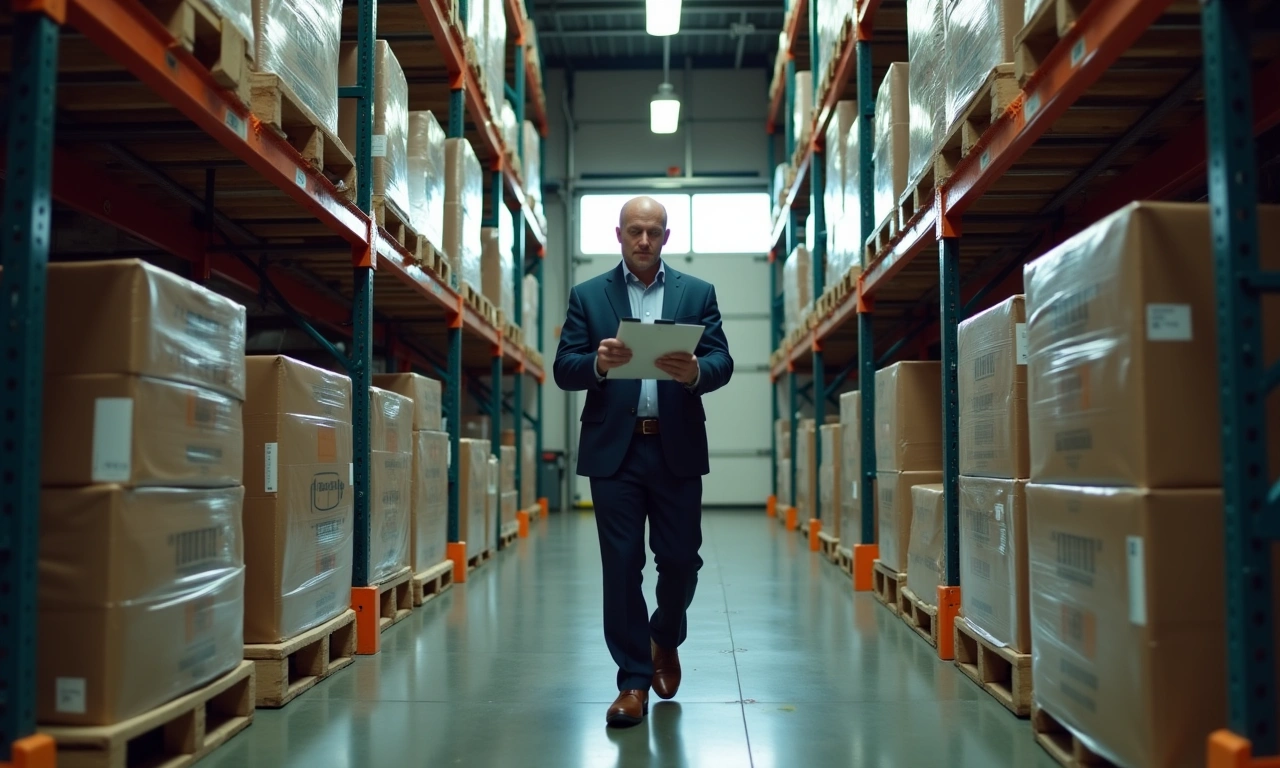
On larger facilities, this is a real dollar line item, not a rounding error. One disclosed example ran roughly $400,000 a year in monitoring costs. That was on a $150 million revolver at 60% average utilization.
Field exam pricing doesn't scale down proportionally with facility size. A lender still has to send an examiner to verify inventory and receivables.
That's true whether the facility is $5 million or $50 million. The visit costs roughly the same either way.
That's part of why very small ABL deals are harder to place economically.
The fixed cost of monitoring eats a larger share of a small facility's return. A large facility absorbs that cost more easily. See how field exam fees tie into the borrowing base setup.
Origination and Closing Costs
Every ABL facility carries closing costs beyond rate and ongoing fees. These are one-time charges. They get the facility documented and the lender's lien in place.
Legal fees cover drafting and negotiating the credit agreement. For ABL, that agreement is typically more detailed than a standard bank line. That's because of the borrowing base and collateral reporting mechanics baked into it.
UCC search and filing fees let the lender perfect its lien on receivables and inventory. If equipment or real estate secures the loan, expect appraisal fees too. The lender needs a current valuation before advancing against those assets.
These costs move with deal complexity and collateral type, not with a single fixed percentage. A simple receivables-and-inventory facility closes cheaper than one layered with equipment and real estate. Add multiple lenders in a syndicate, and it costs more still.
Why Non-Bank ABL Pricing Runs Higher Right Now
Two market surveys explain the pricing gap between bank and non-bank ABL desks in 2026. They point in the same direction.
The Fed's April 2026 SLOOS reported tighter C&I lending standards. Demand held roughly unchanged across firms of all sizes.
Banks are pulling back on risk appetite while borrower interest stays steady. That combination pushes marginal deals toward non-bank capital.
SFNet's Q1 2026 Asset-Based Lending Index, published July 1, 2026, shows the sentiment split directly. Bank lender confidence fell 7 points to 55. Non-bank lender confidence rose 9 points to 67, the highest in three-plus years.
Activity data backs up the confidence gap. Bank new ABL commitments stayed flat in Q1 2026.
Non-bank new commitments rose 1%, per SFNet. Non-bank lenders are stepping into the space banks are stepping back from.
That's exactly why non-bank pricing runs at a premium right now. It's worth understanding before you assume speed and flexibility come free.
Non-bank lenders fund outside the deposit-funded bank model, so their cost of capital runs higher. 2026's tighter bank standards are widening that gap further, not closing it.
Quick Check
See what you qualify for in under 3 minutes.
No personal guarantee required. No hard credit pull. Revenue history is what qualifies you.
Check Capital Eligibility →Complete 2026 ABL Rate and Fee Reference Table
Every stat cited in this article, consolidated into one searchable table. Filter by keyword to find a specific figure.
| Metric | Value | Source | Category |
|---|---|---|---|
| ABL revolver spread, tight end (well-collateralized) | SOFR+125bps | ABF Journal, "Middle Market Debt Weekly," 2026 | Rates |
| ABL revolver spread, typical cluster | SOFR+150 to SOFR+200bps | SEC-filed credit agreements, 2026 | Rates |
| Unused line fee range | 0.15%–0.50% per annum | SEC-filed credit agreements | Fees |
| Tiered unused fee example | 0.375% up to threshold, 0.25% above | SEC-filed credit agreements | Fees |
| Field exam & monitoring blend (illustrative) | ~1% commitment + ~0.5% monitoring | Industry ABL advisory publications | Monitoring |
| Disclosed monitoring cost example | ~$400,000/yr on $150M revolver, 60% avg. utilization | Industry ABL advisory publications | Monitoring |
| Fed SLOOS, C&I lending standards, Q1 2026 | Tighter standards, unchanged demand, all firm sizes | Federal Reserve SLOOS, April 2026 | Market |
| SFNet bank lender confidence, Q1 2026 | Fell 7 points to 55 | SFNet ABL Index, published July 1, 2026 | Market |
| SFNet non-bank lender confidence, Q1 2026 | Rose 9 points to 67 (highest in 3+ yrs) | SFNet ABL Index, published July 1, 2026 | Market |
| Bank new ABL commitments, Q1 2026 | Flat | SFNet ABL Index, published July 1, 2026 | Market |
| Non-bank new ABL commitments, Q1 2026 | +1% | SFNet ABL Index, published July 1, 2026 | Market |
Methodology: How We Sourced This Breakdown
We pulled every rate and fee figure in this article from five source categories. Each is tiered by how directly it traces back to primary data.
Tier 1 sources are the Federal Reserve's Senior Loan Officer Opinion Survey (SLOOS), April 2026. The second is SFNet's Q1 2026 Asset-Based Lending Index, published July 1, 2026.
Tier 2 sources are ABF Journal's "Middle Market Debt Weekly," 2026 reporting on revolver spreads. The second is SEC-filed credit agreements disclosing pricing and unused fee terms.
Tier 3, illustrative, covers industry ABL advisory publications describing typical field exam and monitoring blends. We present these as illustrative, not a universal fixed rate.
We didn't include any figure that wasn't traceable to one of these five sources. Where a range is wide, such as SOFR+125 to SOFR+200bps, we kept the full range. We didn't collapse it into a single misleading midpoint.
Last updated: August 16, 2026. We re-check this page as new SLOOS and SFNet survey data is published.
Frequently Asked Questions
Financial Disclaimer: Figures here come from credit agreements, industry surveys, and advisory publications. They're provided for informational purposes only.
Individual pricing varies by lender, collateral quality, credit profile, and facility size. This content does not constitute financial advice.
Meridian Private Line is a marketing affiliate. See our full disclosure policy.
Ready to check your options?
Meridian Private Line connects operators with independent financing partners. Not a lender. Affiliate partnerships present.
This is educational content, not financial advice.
Check Capital Eligibility →