Most commercial lenders require 20–35% down. LTV above 75% typically requires additional reserves or a stronger DSCR. DSCR of 1.25+ is the standard minimum for most lenders.
Affiliate Disclosure: This site contains affiliate links. We earn compensation when you click links to lender partners. This does not affect your rates or terms. Full disclosure.
How Commercial Real Estate Loans Differ From Business Loans
A standard business term loan is underwritten on your company's cash flow, revenue history, and personal credit score.
A commercial real estate loan is underwritten primarily on the property itself, its income, its value, and what the lender can recover if you stop paying.
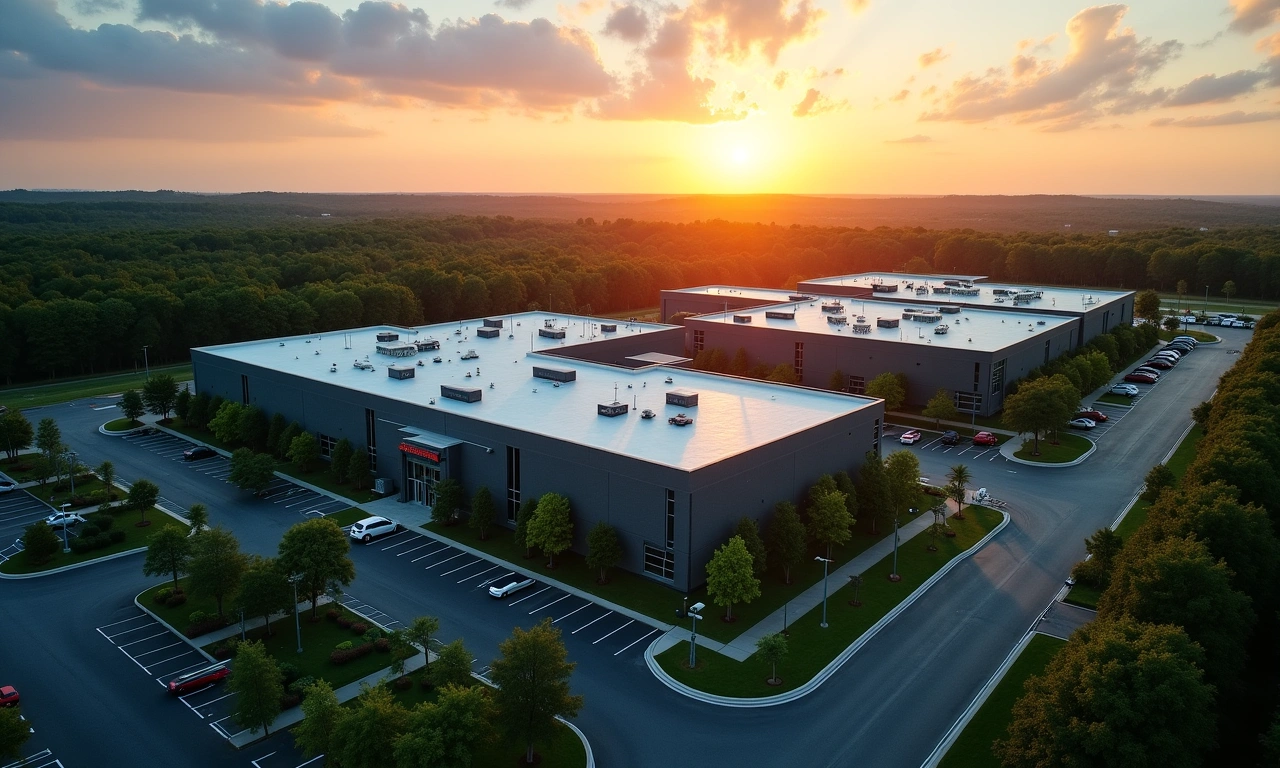
That shift changes everything: the application, the documentation, the timeline, and the lender type you should be talking to.
Most business lenders don't touch CRE at all, and most commercial real estate lenders don't write unsecured business loans.
The Documentation Gap
Business loan applications typically run 5–15 pages and close in days or weeks.
Commercial real estate loan packages include the property appraisal, rent rolls, and operating statements. Environmental reports and title work add complexity and extend timelines to 60–90 days at banks.
Recourse vs. Non-Recourse
Most business loans are full recourse, meaning the lender can pursue your personal assets if the loan defaults.
Some commercial real estate loans, particularly CMBS and life insurance loans, are non-recourse, which limits the lender's recovery to the property itself. That's a meaningful structural difference that affects your personal risk exposure.
Loan Types for Long-Term Commercial Real Estate
There's no single "commercial real estate loan." The product you qualify for depends on occupancy type, property class, loan size, and your timeline.
Here are the main categories you'll encounter in 2026.
Conventional Bank Loans
These are standard commercial mortgages issued by banks, credit unions, and regional lenders.
Typical LTV caps at 70–75% with terms running 5–25 years. Rates in 2026 fall in the 6.5–9.5% range depending on property type and borrower strength.
SBA 504 Loans
The SBA 504 is specifically for owner-occupied commercial property.
It lets eligible small business owners put just 10% down by stacking a bank first mortgage at 50% LTV with a CDC second loan at 40% LTV. The fixed-rate CDC portion runs 10 or 20 years with pricing near 6.5–7.5%.
SBA 7(a) Loans
The 7(a) is more flexible than the 504 and allows mixed-use and partially owner-occupied properties. LTV can reach 85–90% with terms extending up to 25 years.
The rate floats at Prime plus 2.75%, putting it in the 10–11% range at current benchmark rates.
CMBS Loans
Commercial mortgage-backed securities loans are typically non-recourse and pool into securities sold to investors.
They work best for stabilized, income-producing properties over $2 million with LTV at 70–75%. They're less ideal for value-add plays or unstable cash flow properties.
Private and Bridge Loans
Private lenders and hard money sources can close in 10–21 days.
You'll pay for that speed: rates run 8–15% with LTV topping out at 65–70%. Terms are typically 1–3 years, designed as short-term solutions while you stabilize a property.
Life Insurance Company Loans
Life insurance lenders are the most conservative and competitive on rate. They lend at 55–65% LTV with DSCR requirements of 1.35 or higher.
They target trophy-class assets with long-term lease commitments and offer rates of 5.5–7.5% on 10–30 year terms.
What Lenders Underwrite: LTV, DSCR, and NOI Explained

Three numbers drive every commercial real estate underwriting decision: LTV, DSCR, and NOI.
Understanding what each one means will save you weeks with underwriters. Know your numbers before you apply.
Loan-to-Value (LTV)
LTV is the loan amount divided by the appraised property value. A $1,500,000 property with a $1,125,000 loan equals 75% LTV.
Most bank lenders cap at 75%, while life insurance companies often want 65% or lower.
Debt Service Coverage Ratio (DSCR)
DSCR measures whether the property earns enough income to cover its loan payments. The formula is Net Operating Income divided by Annual Debt Service.
A DSCR of 1.25 means the property generates $1.25 in income for every $1.00 of loan payment. This is the minimum most lenders accept; anything below 1.0 means the property loses money.
Net Operating Income (NOI)
NOI is the property's gross rental income minus operating expenses, before mortgage payments and depreciation. Lenders use trailing 12-month actual NOI verified by operating statements.
They apply a vacancy factor (typically 5–10%) even if the property is fully leased, not projected income.
Amortization vs. Loan Term
Commercial real estate loans often have shorter terms than their amortization schedules. A 25-year amortization with a 10-year term calculates payments over 25 years.
A balloon payment comes due at year 10; many first-time CRE borrowers miss this balloon risk.
CRE Lenders and Rate Ranges in 2026
Rate ranges below reflect 2026 market conditions and vary by property type, location, and borrower credit profile.
Use this as a starting point for lender conversations, not as a quote.
| Loan Type | Max LTV | Term | Rate Range | Best For |
|---|---|---|---|---|
| Conventional Bank Loan | 75% | 5–25 yr | 6.5–9.5% | Strong credit, existing banking relationship |
| SBA 504 | 90% (10% down) | 10 or 20 yr | ~6.5–7.5% fixed | Owner-occupied, small business |
| SBA 7(a) | 85–90% | Up to 25 yr | Prime + 2.75% | Mixed-use or partially owner-occupied |
| CMBS Loan | 70–75% | 5–10 yr | 6–9% | Non-recourse, large properties ($2M+) |
| Private / Bridge | 65–70% | 1–3 yr | 8–15% | Fast close, value-add properties |
| Life Insurance / DSCUS | 55–65% | 10–30 yr | 5.5–7.5% | Trophy assets, low leverage |
Property Type Matters as Much as Loan Type
Lenders don't treat all commercial real estate equally. Multifamily and industrial properties are most lender-friendly today.
Retail and hospitality carry more scrutiny with higher spreads and lower maximum LTVs.
Owner-Occupied Office
SBA 504 is typically the best path with 10% down and fixed rates. Conventional banks lend at 70–75% LTV for strong borrowers.
Retail Strip Center
Bank or CMBS financing works for stabilized centers with anchor tenants. Lenders scrutinize tenant credit and lease schedules.
Warehouse / Industrial
One of the strongest property classes in 2026. Life insurance lenders actively compete at 55–65% LTV with tight cap rates.
Multi-Tenant Mixed-Use
SBA 7(a) works if owner-occupancy exceeds 51%. Otherwise expect conventional bank terms at 70–75% LTV with emphasis on occupancy and stability.
Compare commercial real estate loan options, no hard credit pull.
Most borrowers receive competing term sheets within 48 hours.
Check My Options →Key Commercial Real Estate Lending Terms
Commercial real estate has its own vocabulary that lenders expect you to know. These are the terms in every term sheet and loan document.
Balloon Payment
The lump-sum principal balance due at the end of a loan term shorter than the amortization period. A 25-year amortization with 7-year term means owing 80–85% as a balloon at year seven.
Prepayment Penalty / Defeasance
Most commercial loans carry prepayment restrictions. Step-down penalties decline over time (e.g., 5-4-3-2-1%).
CMBS loans often use defeasance, requiring Treasury securities substitution instead of payoff: a complex, expensive exit.
Loan-to-Cost (LTC)
LTC applies to construction and value-add projects, measuring loan against total project cost. Most lenders cap LTC at 75–80% for ground-up construction.
Rehab projects max out at 80–85% depending on borrower experience.
Cap Rate
Cap rate is NOI divided by property value: the yield before financing costs. Lenders use cap rates to benchmark value independently.
A property at 5% cap in a 7.5% rate environment has negative leverage; financing costs exceed earnings.
Frequently Asked Questions
Most conventional commercial lenders require 20–25% down, which puts the maximum LTV at 75–80%.
SBA 504 loans allow as little as 10% down for owner-occupied properties. Private and bridge lenders typically cap LTV at 65–70%, requiring 30–35% down.
The standard minimum DSCR for most commercial real estate lenders is 1.25, meaning the property's net operating income must be at least 25% higher than the annual debt service.
Stronger deals often target 1.30 or higher. Life insurance companies and CMBS lenders sometimes require 1.35+.
Yes, but your options narrow considerably. Private bridge lenders focus heavily on asset value and exit strategy rather than borrower credit scores.
Expect higher rates, typically 10–15%, and lower LTV limits around 60–65%. Bank and SBA financing will require a minimum credit score around 680–700.
A conventional commercial mortgage is a single loan from one lender, typically requiring 25–30% down with terms up to 25 years.
An SBA 504 loan is structured as two loans: a first mortgage from a bank at 50% LTV and a certified development company (CDC) loan at 40% LTV, requiring only 10% down from the borrower. The 504 is restricted to owner-occupied properties used for business operations.
Bank loans and conventional commercial mortgages typically take 60–90 days. SBA 504 loans run 90–120 days due to the additional government review process.
Private bridge lenders can close in 10–21 days, making them the fastest option for time-sensitive acquisitions or value-add deals.