Affiliate Disclosure: This site contains affiliate links. We earn compensation when you click links to lender partners. This does not affect your rates or terms. Full disclosure.
Compare capital options for your business.
Pre-qualification takes under 2 minutes. No hard pull.
What Types of Equipment Will Lenders Actually Finance?
Equipment lenders draw a sharp line between titled collateral and general business property. Titled collateral, meaning assets that carry a legal title or serial number, gives lenders a clear repossession path, which is why approval rates are significantly higher for these categories.
Hard Equipment (Most Fundable)
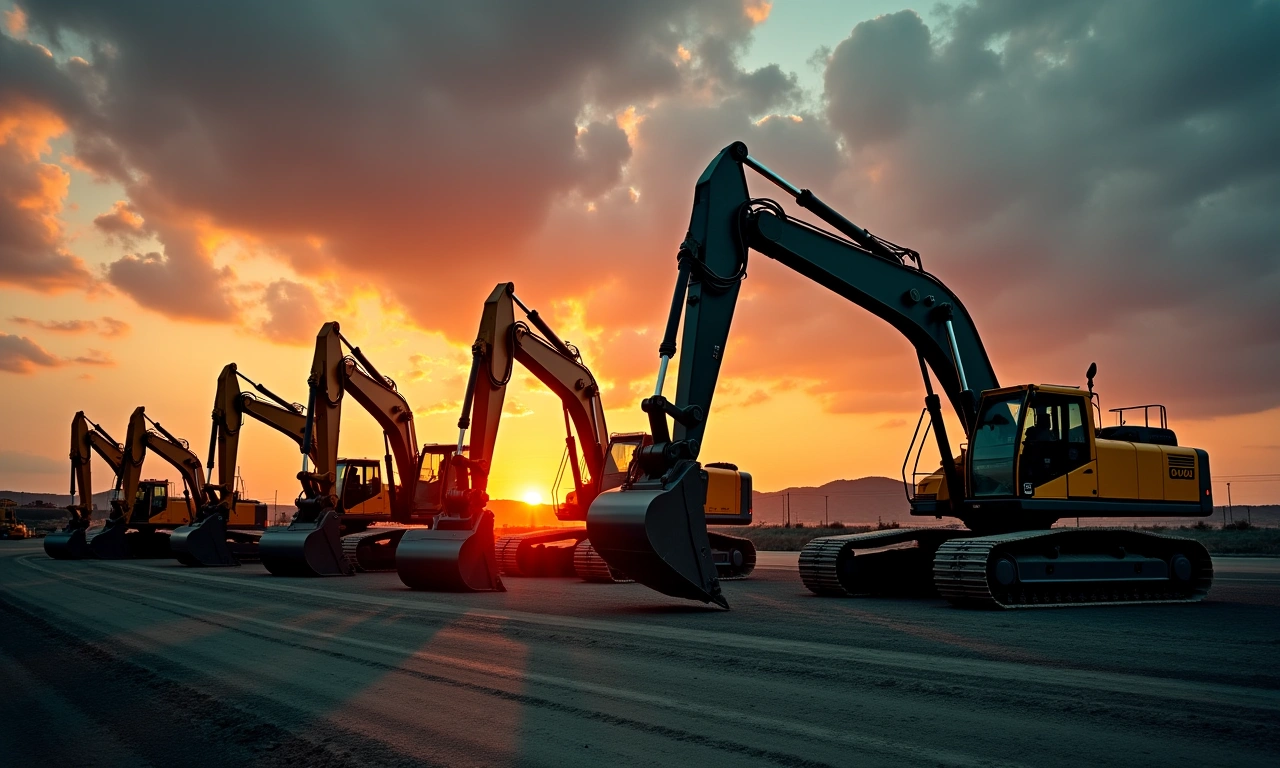
- Construction and heavy equipment: excavators, bulldozers, cranes, forklifts. Average loan amounts run $85,000 to $750,000 (Equipment Leasing and Finance Association, 2025).
- Commercial vehicles and fleets: semi-trucks, delivery vans, vocational trucks. Lenders will typically finance 100% of invoice price on late-model units (under 5 years old).
- Manufacturing machinery: CNC machines, injection molding presses, conveyor systems. Useful life of 10+ years qualifies for terms up to 84 months.
- Medical and dental equipment: imaging systems, dental chairs, surgical lasers. Specialty lenders like Stearns Bank price these at 6.5% to 9.0% APR due to strong secondary markets.
- Restaurant and food service: commercial ovens, refrigeration units, hood systems. Terms of 36 to 60 months are standard; soft-cost add-ons (installation, freight) are sometimes financed alongside.
Technology and Soft Assets (Conditionally Financed)
Computers, servers, and point-of-sale systems depreciate quickly. Most lenders cap terms at 36 months and require a higher down payment, often 15% to 20%, to protect against rapid depreciation.
Software-only or intangible assets are generally excluded from equipment loans. If your purchase bundles hardware and software, lenders may finance only the hardware portion, splitting the invoice.
Specialty and Agricultural Equipment
Tractors, combines, irrigation systems, and processing equipment qualify through USDA FSA programs and agricultural lenders like Farm Credit. The USDA Farm Service Agency offers equipment loans up to $600,000 at below-market rates for qualifying farm operations (USDA FSA, 2025).
Rule of thumb: If the asset has a serial number, a resale market, and a useful life exceeding the loan term, a lender will likely finance it. If it depreciates to near-zero within three years, expect stricter terms or outright declines.
Loan or Lease? The Decision Framework That Saves You Money
The loan-versus-lease decision is primarily a question of asset retention and tax strategy, not just monthly cash flow. Both structures serve legitimate business purposes, and the wrong choice can cost you thousands over the life of the agreement.
When a Term Loan Wins
Choose a loan when you expect to use the asset for its full useful life, when equipment customization is required, or when ownership builds equity you may need as collateral later. Loan interest is deductible as a business expense, and Section 179 of the IRS code allows you to deduct up to $1,220,000 in equipment purchases in the year placed in service (IRS Publication 946, 2025 tax year).
| Factor | Term Loan | Operating Lease |
|---|---|---|
| Ownership at end of term | Yes | No (unless buyout exercised) |
| Balance sheet treatment | Asset + liability recorded | Off-balance sheet (ASC 842 exceptions) |
| Section 179 eligibility | Full deduction in year 1 | Lease payments deducted annually |
| Ideal asset lifespan | 7+ years | 3 to 5 years (fast-depreciating) |
| Typical APR range | 6.5% to 18% | Effective rate 8% to 22% |
| Down payment required | 0% to 20% | First + last payment only |
When a Lease Wins
Leasing makes sense for technology with a short useful life, equipment you will return and upgrade every 3 to 4 years, or when you need to preserve cash and keep debt off the balance sheet. Operating leases under ASC 842 may still qualify for off-balance-sheet treatment for smaller lessees.
The Equipment Leasing and Finance Association reports that 80% of U.S. businesses use some form of equipment financing, and 39% of all equipment is acquired via lease (ELFA, 2025 Annual Report). The split is roughly even between finance leases and operating leases at the SMB level.
Key question: Will you still want this asset in year 8? If yes, buy it. If you would rather have the newest model, lease it. That single answer settles most loan-versus-lease decisions for small business owners.
Down Payments and LTV: What Lenders Demand in 2026
Loan-to-value (LTV) ratios on equipment loans range from 80% to 100% depending on asset type, borrower creditworthiness, and lender risk appetite. Understanding where you land on that spectrum determines how much cash you need at closing.
LTV by Asset Category
| Equipment Type | Typical Max LTV | Down Payment Range |
|---|---|---|
| Commercial vehicles (new) | 100% | 0% to 5% |
| Construction equipment (new) | 90% to 100% | 0% to 10% |
| Manufacturing machinery (new) | 85% to 100% | 0% to 15% |
| Used equipment (5 to 10 yrs) | 75% to 85% | 15% to 25% |
| Technology / computers | 70% to 80% | 20% to 30% |
| Restaurant equipment | 80% to 90% | 10% to 20% |
How Credit Score Moves the LTV Needle
Borrowers with personal FICO scores above 720 routinely receive 100% financing on new assets with strong residual values. A score between 650 and 720 typically triggers a 10% to 15% down payment requirement, even on identical assets (Nav.com SMB Lending Survey, Q1 2026).
Time in business matters equally. Lenders see less than 2 years in operation as a risk multiplier, often requiring 20% down regardless of credit score.
Soft Costs: What Can Be Rolled In?
Many lenders allow financing of soft costs alongside the equipment purchase. Common add-ons include freight and delivery (up to 10% of equipment cost), installation and commissioning, extended warranties, and initial service agreements. Rolling in soft costs raises the effective LTV above 100%, which is why lenders scrutinize this carefully.
Negotiation tip: If you have strong credit and a new-equipment purchase, ask specifically for 100% financing with soft costs included. Many bank and captive lenders offer this on a promotional basis to move volume, especially in Q4.
The Exact Qualification Requirements for Equipment Term Loans
Equipment loans are among the most accessible forms of secured business financing because the asset itself serves as collateral. That said, lenders still apply credit, revenue, and documentation filters to manage default risk.
Core Credit Thresholds
- Banks and credit unions: Personal FICO 680+, 2+ years in business, $250,000+ annual revenue.
- SBA 7(a) and 504 loans: Personal FICO 650+, 2+ years, must occupy 51%+ of commercial property for 504 loans.
- Online equipment lenders: Personal FICO 580+, 1+ year in business, $100,000+ annual revenue (Fundera Lender Data, 2026).
- Captive finance companies (dealer financing): Varies widely; some programs approve scores as low as 550 on new equipment with large down payments.
Financial Documentation Required
- Last 2 years of business tax returns (or YTD P&L if less than 2 years old)
- Last 3 to 6 months of business bank statements
- Equipment invoice or purchase agreement from the vendor
- Personal financial statement (required for loans above $150,000 at most banks)
- Business formation documents: articles of incorporation, operating agreement, or DBA certificate
Debt Service Coverage Ratio (DSCR)
Lenders calculate DSCR as net operating income divided by total debt service. Most banks require a minimum DSCR of 1.25x, meaning your business generates $1.25 in cash flow for every $1.00 of debt payments. Equipment payments are included in the denominator.
A business with $200,000 in annual net operating income carrying $140,000 in existing debt service can support approximately $20,000 in additional annual equipment payments before hitting the 1.25x floor. Knowing this number before applying saves time and protects your credit score from unnecessary hard pulls.
Fast-track approval path: New equipment purchases from authorized dealers, borrowers with FICO above 700, and loan amounts under $150,000 qualify for many lenders' expedited or app-only approval programs with funding in 24 to 48 hours. See our guide on how to qualify for business credit for cross-product qualification strategy.
Your Real Lender Options: Banks, Online Lenders, SBA, and Captive Finance
Equipment financing is one of the most competitive segments of small business lending. That competition works in your favor: you have more lender options than nearly any other financing type, and rate spreads between lenders on the same deal can exceed 8 percentage points.
Lender Types Compared
| Lender Type | APR Range | Max Loan | Min FICO | Funding Speed |
|---|---|---|---|---|
| Community banks | 6.5% to 9.5% | $5M+ | 680 | 2 to 4 weeks |
| SBA 504 loan | 5.9% to 7.5% (fixed) | $5.5M | 650 | 45 to 90 days |
| SBA 7(a) loan | Prime + 2.75% to Prime + 4.75% | $5M | 650 | 30 to 60 days |
| Online equipment lenders | 8% to 25% | $500K | 580 | 24 to 72 hours |
| Captive / dealer finance | 0% to 12% (promo) | $250K | 550 | Same day |
| Equipment lessors (TRAC) | Effective 8% to 18% | Varies | 600 | 3 to 7 days |
Notable Equipment Lenders in 2026
- Stearns Bank: Nationwide equipment-only lender. Strong in medical, ag, and construction. Approves used equipment up to 15 years old.
- Balboa Capital: Online lender with fast 24-hour approvals on $5,000 to $500,000 equipment deals. No minimum time in business requirement for equipment-only transactions.
- Crest Capital: Specializes in $5,000 to $1M equipment and technology financing. Fixed-rate terms from 24 to 72 months, no prepayment penalty.
- Bank of America Business Advantage: Preferred for existing BofA customers. Equipment loans from $25,000 with competitive rates for 680+ FICO borrowers.
- Currency (formerly Ascentium Capital): Strong in healthcare, food service, and clean energy equipment. Acquired by Currency Capital in 2024.
For Utah-based businesses, local community banks and credit unions often match or beat online lenders on rate for strong borrowers. See our analysis of best lenders in Utah for regional options that also write equipment loans alongside revolving credit facilities.
Stack your options: Captive dealer financing at 0% promotional rates beats everything on cost, but it is typically capped at 24 to 36 months. Compare the total interest paid, not just the monthly payment, before signing. A 0% rate on a 24-month term can cost more in total than a 7% loan amortized over 60 months if cash flow is the constraint.
The Equipment Loan Application Process: From Quote to Funded
Equipment loan applications are faster and simpler than general business term loans because the collateral is identified upfront. A clean application package with all documentation in order can move from submission to funding in as little as 24 hours with online lenders, or 2 to 3 weeks with a bank.
Step-by-Step Application Timeline
- Get a vendor quote or invoice. You need the exact purchase price, equipment description, serial or model number, and vendor name. Many lenders require a signed purchase agreement before issuing approval.
- Pull your personal and business credit. Check for errors before the lender does. Dispute inaccuracies at least 30 days before applying. One derogatory item removed from a report can shift your FICO score 20 to 40 points (Experian, 2025).
- Gather financial documents. Two years of business tax returns, 3 to 6 months of bank statements, current P&L statement, and a personal financial statement if the loan exceeds $150,000.
- Submit to 2 to 3 lenders simultaneously. Multiple applications within a 30-day window are treated as a single inquiry for FICO purposes under FICO's deduplication logic. Rate-shop without penalty.
- Review term sheets carefully. Scrutinize origination fees (typically 1% to 3%), prepayment penalties, and whether the rate is fixed or floating. Floating rates tied to Prime or SOFR add rate risk over long terms.
- Sign and fund. Bank wires are typically sent directly to the vendor. Some online lenders deposit funds to your business account and you pay the vendor separately.
Common Application Mistakes That Cause Delays
- Submitting a quote instead of a firm invoice. Lenders want final pricing, not estimates.
- Missing Schedule C or K-1 from tax returns when the business has partners or pass-through income.
- Not disclosing all existing liens. UCC lien searches are standard; surprises kill deals.
- Applying for more than the equipment costs. Equipment loans are collateral-specific; over-requesting triggers scrutiny.
If your equipment purchase connects to a broader capital plan, a revolving line of credit may run alongside an equipment term loan to cover soft costs, working capital gaps, or the next purchase cycle. Compare structures in our guide on revolving credit vs. term loans, and review working capital lines of credit if operational cash flow is part of the equation.
Post-funding step most borrowers skip: File a copy of the UCC-1 financing statement yourself and track the lien release date. Lenders are legally required to file a UCC-3 termination within 20 days of payoff, but errors happen. An unreleased lien on paid-off equipment blocks future financing on that asset.
Equipment Finance
See what you qualify for in under 3 minutes.
No hard credit pull. Revenue history is what qualifies you, not just your FICO score.
Check Capital Eligibility →Frequently Asked Questions
What credit score do I need for an equipment purchase loan?
Credit score requirements vary by lender type. Traditional banks and credit unions typically require a personal FICO score of 680 or higher. SBA equipment loans through the 7(a) and 504 programs generally require a minimum of 650. Online equipment lenders like Balboa Capital and Crest Capital approve borrowers with scores as low as 580, though rates are higher in that range. Captive dealer financing programs sometimes go below 580 with a larger down payment, particularly on new equipment purchases. Your business credit profile, time in business, and debt service coverage ratio all factor in alongside your personal score.How much down payment is required for an equipment loan?
Down payment requirements depend on asset type, equipment age, and your credit profile. New commercial vehicles and construction equipment from strong borrowers often require zero down, with 100% LTV financing available. Used equipment typically requires 15% to 25% down due to faster depreciation and weaker secondary market values. Technology assets like computers and servers usually require 20% to 30% down given their rapid obsolescence. Borrowers with personal FICO scores above 720 and two or more years in business have the most leverage to negotiate low or no down payments, especially when buying from authorized dealers.Is it better to take a loan or lease for equipment?
The loan-versus-lease decision depends on how long you plan to use the asset and your tax strategy. A term loan is better when you expect to use the equipment for its full useful life (typically 7 or more years), when you want to build equity in the asset, or when you plan to use the IRS Section 179 deduction to write off up to $1,220,000 in the year of purchase. A lease makes more sense for technology with a short useful life, equipment you plan to upgrade every 3 to 5 years, or when you need to preserve cash and minimize balance sheet liabilities. Compare total cost of ownership over the expected hold period, not just monthly payments, before deciding.How fast can an equipment loan be approved and funded?
Funding speed varies significantly by lender. Online equipment lenders like Balboa Capital and Crest Capital can approve and fund loans under $150,000 in 24 to 72 hours when documentation is complete and the borrower has good credit. Community banks typically take 2 to 4 weeks due to underwriting committee review and UCC lien searches. SBA 504 loans, which offer the lowest fixed rates for larger equipment purchases, require 45 to 90 days to close due to SBA review requirements. Captive dealer financing from manufacturers like Caterpillar Financial or John Deere Financial can approve same-day for qualified buyers purchasing new equipment. Having your invoice, tax returns, and bank statements ready before applying cuts processing time significantly at every lender type.What types of equipment do lenders refuse to finance?
Lenders generally decline to finance assets that depreciate quickly to near-zero value, have no viable secondary market, or lack a serial number or title that can serve as collateral. Software-only purchases are almost universally excluded from equipment loans, though software bundled with hardware may qualify at the hardware value. General office furniture, consumable supplies, and highly specialized single-use machinery with no resale market are also difficult to finance through standard equipment loan channels. Very old used equipment, typically more than 15 years old depending on the category, often exceeds lender age restrictions. For assets that do not qualify, a working capital line of credit or unsecured term loan may be an alternative, though at higher rates.Free With Your Application: Get two strategist frameworks, The FUNDABLE Positioning Framework and The Strategic Loan Stacking Playbook ($594 value), when you apply for a business term loan.
Financial Disclaimer: The information on this page is provided for educational and informational purposes only and does not constitute financial, investment, legal, or tax advice. Credit availability, terms, and rates vary by applicant profile, lender, and market conditions. Consult a qualified financial advisor before making capital decisions.
Meridian Private Line is a marketing affiliate, see our full disclosure policy.
Ready to check your business credit options?
Meridian Private Line connects operators with independent financing partners. Not a lender. Affiliate partnerships present.
This is educational content, not financial advice.
Check Capital Eligibility →